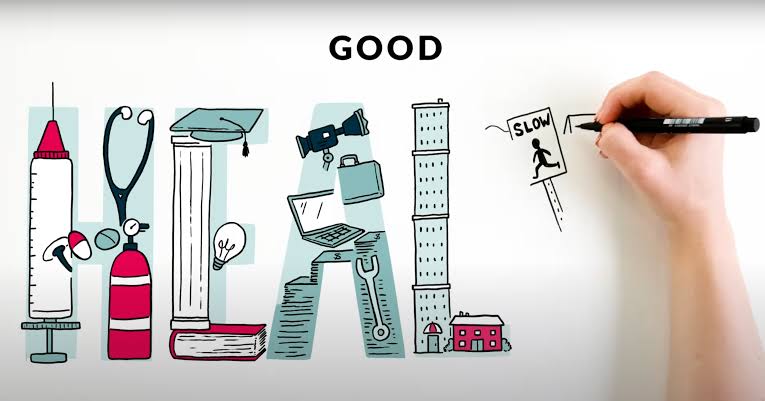
One of the most difficult concepts in the world can be explained in ten minutes and made easily understood in less than half a minute. One hallmark of short-form video is that it’s exactly what it’s about. Sites built around rapid clips turn stats, monetary terms, technology, sports analysis, and even psychological theories into manageable stories that are easy to understand.
There’s not much of an appeal to explain. Information overload, notifications, choices, and short attention spans are ever-present challenges. The trick with short videos is to downplay that load by choosing what is important (or sometimes what seems to be important) and then delivering it in a visually stimulating package.
Let’s take a closer look at why simplicity matters.
The Importance of Simplicity
Short videos can be thought of as a cognitive load reduction machine. The viewers don’t have to listen to a prolonged explanation, but the information is disassembled into the familiar: a problem, interesting fact, visual example, and a brief “takeaway.
This creates the mental ease, or cognitive fluency, of reading. The interesting part is this: When the underlying content of an information piece is complex, information that is easy to understand can also seem more credible or familiar.
For instance, if a supermarket receipt is turned into a 30-second video about a whole economic trend, viewers might take it as a starting point. That can be useful. It also takes away context, exceptions, and uncertainties. The viewer gets insight but not necessarily the full picture.
Cognitive bias comes into play at this point. The first number or first claim might be particularly significant with anchoring. Information can be interpreted differently, depending on how it’s framed. Likes, comments, views, and shares can add another layer of perceived credibility, since they’re social proof.
The brain may not necessarily be deceived. It’s on its mission as always: to find efficient ways to make sense of an information-dense environment. In-play betting, for instance, shows how statistics, changing probabilities, scores, and momentum can become immediate visual signals.
How the Brain Processes Events Rapidly
Another reason short-form video is effective is that the human brain is extremely “novelty-driven,” “moving,” and “emotional. Popping a face on screen, changing a number, or making a surprising statement will grab the audience’s attention faster than a paragraph of text.
The “reward” system also has an impact. With every swipe, there is a little bit of anticipation: What’s next? Occasionally, the following clip is dull. At times it’s incredibly helpful and/or amusing. This unpredictability establishes a design that can be seen as a variable reward, which can help to explain why people scroll more than they wish to.
That behavior is similar to a dopamine loop, but while dopamine is part of an explanation in pop media, it’s not the full explanation. It is more commonly recognized as being part of the wider reward-learning system of the brain, which reinforces behaviors that are related to anticipation and may be rewarded.
The various formats also become more familiar with repeated exposure. If the same visual structure appears consistently over and over (Hook, Explanation, Example, Payoff), the viewer becomes adept at processing the same structure with few additional thoughts, as it becomes ubiquitous.
This efficiency can come in handy. It can also lead to decision fatigue, as seemingly infinite choices are simplified and the brain is continually asked to make a decision about something new.
Developing and Evaluating an Explanation
The very best short videos do more than just explain. They develop a way to a choice.
Some typical structures are:
Surprising information and simplified explanation lead to an apparent answer if there is one, or to a problem if there isn’t.
Discuss a technology video about a comparison of two smartphones. Rather than cover all the specs, it can focus on three: camera quality, battery life, and price. With a single stroke, a complex buying process becomes a comparison.
You see it in sports analysis, investment content, product reviews, etc., and, of course, in digital services, where before-and-after illustrations, countdowns, percentages, arrows, and charts turn abstract information into a tangible image.
The risk isn’t easy. The issue is when the presentation gives the impression of being more confident than the evidence warrants.
A prediction can be in the form of a probability. A correlation can appear as causation. There can be many complex behavioral patterns that can be simplified to one “catchy” rule. The brain wants simple solutions, and sometimes it doesn’t have them.
How Digital Information Becomes Real-Time
This can be especially relevant in digital environments where information is constantly changing. For example, in in-play betting, statistics and probability updates, scores, and momentum can all be immediate visual cues.
A short video that explains that to them may be the only way to translate a complicated stream of data into a few familiar cues: Recent performance, current score, time remaining, or a changing probability. IviBet Denmark, for instance, may be part of this bigger, compressed digital environment – for somebody who is surfing the web to discover a platform or market in an individual area.
It’s not about the platform; it’s about the underlying behavioral mechanism. It’s how information constantly changes and makes every new update feel like a must-read.
Increases digital engagement with notifications, changing numbers, live statistics, and visual alerts. This can create a sense of real probability, as the viewer can “see” the number moving.
The Personalization Feedback Loop
Algorithms can learn from the viewers’ behavior, and short videos become even more influential. If you view specific content over time, recommendations can narrow down over time.
This forms a vicious circle:
Engaging information → rapid interpretation → engagement → personalized recommendations → easier information.
The users get to know the narratives and the visual signals over time. At first, concentration may become an automatic behavioral pattern.
This is why short videos are not “little bits of long articles. They are deliberately designed spaces which involve attention, emotion, repetition, and instant gratification. They can make complex concepts easy to understand in incredible ways – but can also make complex decisions feel like a breeze.