Managing a portfolio of projects often resembles a complex juggling act, where timing, resource management, and strategic vision must align perfectly. Statistics reveal that businesses that leverage project portfolio management (PPM) software enhance their project success rates by substantial margins. PPM tools help streamline business operations by providing a comprehensive overview, which translates to better decision-making and resource management.
Incorporating project portfolio management software enables businesses to unify their project management processes, allowing for a coherent strategy across various initiatives. From reducing risks to optimizing investment returns, the right PPM solution can revolutionize how companies operate. In this article, we will explore the key ways in which PPM software fortifies business operations.
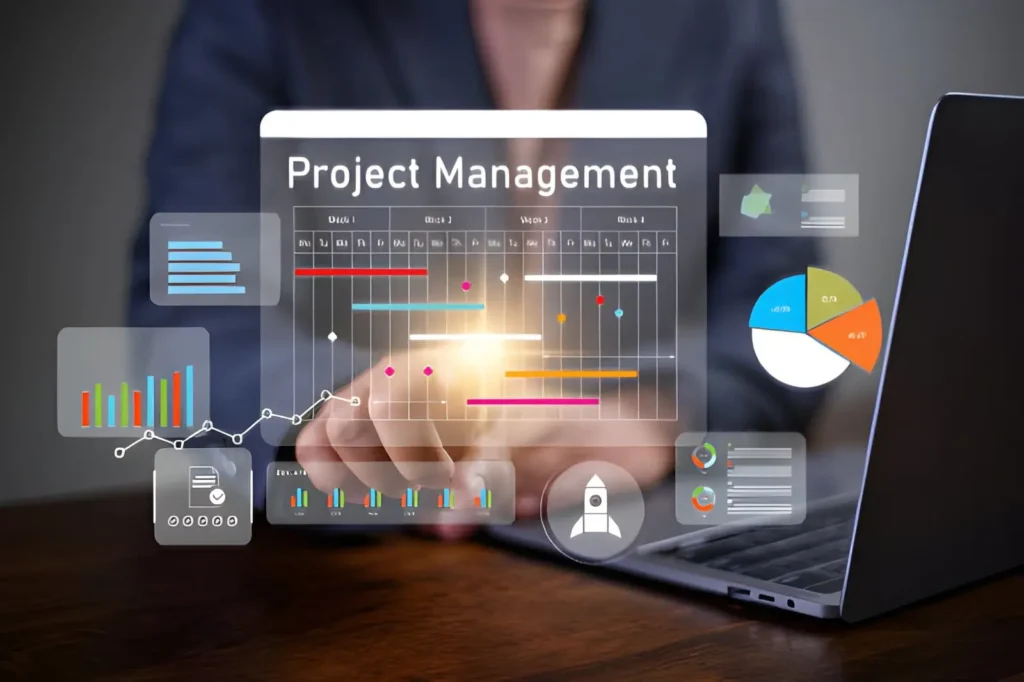
Streamlining Decision-Making with Project Portfolio Management Software
Project portfolio management software gifts leaders with a bird’s-eye view of all ongoing and potential projects. This helicopter perspective is essential for balanced and informed decision-making, enabling managers to see how each project fits within the grander business scheme and objectives. Incorporating software for project portfolio management can enhance these capabilities further.
With the ability to run simulations and what-if scenarios, PPM tools facilitate proactive adjustments before they emerge as costly issues. For instance, a project that’s veering off-course can be reined in quickly by reallocating resources or adjusting timelines, thus minimizing negative impact. Transparency across the board ensures that all stakeholders have access to the same information, fostering a trust-based and collaborative environment.
Actionable guidance from PPM software comes in the form of real-time analytics and dashboard reporting. Decision-makers can prioritize projects according to strategic value, risk, and return on investment, all while maintaining an agile approach that accommodates the dynamic nature of business environments.
Enhancing Resource Allocation Through Automated Tools
Effective resource allocation is pivotal to maximize productivity and efficiency. Project portfolio management software automates this process, leading to an optimal distribution of human and material assets across projects. Predictive analytics tools within PPM software can forecast resource availability and requirements, allowing for preemptive planning.
This level of automation in resource management reduces the likelihood of over-commitment or underutilization, both of which can escalate project costs and extend timelines. baddie hhbensures that managers can plan for future projects without jeopardizing ongoing work, by providing information such as team members’ availability, skill sets, and workload distribution.
Actionable guidance for businesses is to establish centralized coordination within their PPM tool. Centralized coordination allows teams to collaborate seamlessly by accessing a shared pool of resources, thus avoiding silos and mismatches in allocation.
Achieving Strategic Alignment in Business Operations
Strategic alignment is the process of matching project goals with the overarching objectives of the organization. PPM software is invaluable in ensuring that each project contributes to the strategic aims of the business. High-level visibility empowers managers to identify and focus on initiatives that align with the company’s vision and goals.
By offering a framework for aligning projects, PPM tools help filter out initiatives that do not significantly impact the company’s strategic direction. This refinement process prevents resource wastage on low-priority projects and ensures that critical projects receive the attention and investment they deserve. Organization-wide strategic objectives become more attainable when every project is pulling in the same direction.
Implementation of PPM software should involve everyone from executives to project team members. This inclusive approach ensures that the strategy, as crafted at the top tier of management, trickles down effectively and is embraced throughout the organization, fostering a culture of strategic alignment.
Improving Project Delivery and Performance Tracking
PPM software significantly enhances project delivery by facilitating thorough planning and by providing tools for continuous performance monitoring. Monitoring dashboards equip managers with the ability to track key performance indicators (KPIs) for each project against benchmarks and forecasts, allowing for timely interventions when necessary.
Detailed reporting capabilities within PPM tools mean that project progress and outcomes can be assessed against initial goals. This clarity not only improves the delivery of current projects but also informs the planning and management of future initiatives. It provides historical data that can refine estimation practices and success criteria.
To capitalize on these benefits, project managers are advised to continuously update project data within the PPM software. Accurate and updated project data ensures that the software can provide actionable insights, helping managers to guide projects to a successful conclusion, and to glean lessons for future project endeavors.
Ultimately, the implementation of project portfolio management software empowers businesses to make data-driven decisions, streamline resource allocation, align initiatives with strategic objectives, and achieve improved project delivery. By leveraging intuitive platforms and actionable insights provided by these tools, organizations can optimize operations, reduce risks, and position themselves for greater success in their respective industries.