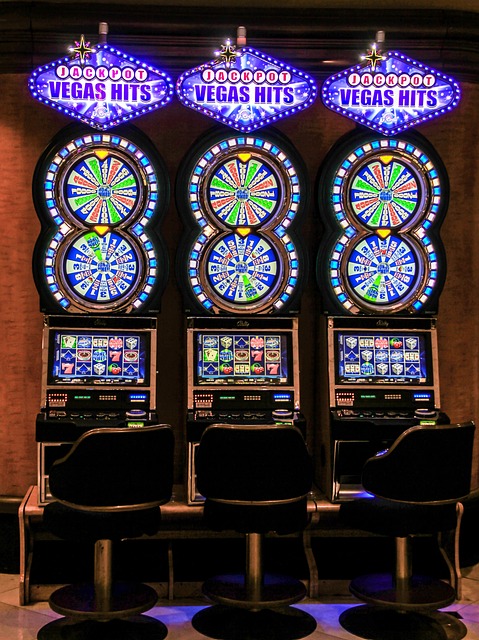
Rewards are everywhere in the digital era – they can be indirect and sometimes hard to overlook. Each ping of the notification, each streak, each pop-up promising an addictive one more, is all part of an elaborate mechanism to catch the eye and get involved in the repeat. They are those viral reward systems: the engines of apps, games, and platforms that make us return to them, many of which we may not even know why.
Having spent some time on SafeCasino Italy IT or visited new online casinos, you, most likely, have experienced what powerful mechanisms these mechanisms may be. It is not by luck or chance, but it is behavioral science at work.
Learning about Viral Reward Systems.
At its essence, a viral reward system has to play to human psychology and motivate people to do it again. The trick is straightforward: the reward must be appealing enough to make users look forward to it, yet unpredictable enough to keep the engagement loop from completing. Consider it an online slot machine in the mind, without the actual wager.
Central here is the variable rewards. These rewards do not always occur, so one cannot predict the next, and each interaction is exciting. It can be either a streak counter that increases until the task is done, or a pop-up notification that provides a bonus, but the uncertainty around the achievement results in engagement. This is what psychologists call a reinforcement schedule, but to most of us, it is simply… irresistible.
This is enhanced by cognitive biases. FOMO (fear of missing out) encourages users to keep on checking back. Loss aversion is why missing a reward feels worse than the gratification of winning. The smallest types of social validation, a like, a badge, a place on a leaderboard, use the same mechanisms as more concrete rewards.
The Brain Behind the Click
What is so attractive about these systems? There are a few answers to neuroscience. The dopamine loop takes centre stage. When we expect a reward, our brain secretes dopamine, a neurotransmitter that provides pleasure, motivation, and learning. The less predictable the reward, the stronger the dopamine response.
The nucleus accumbens and prefrontal cortex regions are responsible for and participate in the assessment of potential rewards and the evaluation of immediate satisfaction versus long-term objectives. The amygdala provides a sense of emotion, increasing the degree of excitement or anxiety. All of these circuits combined can leave us very sensitive even to the smallest cues, such as a flashing icon that hints at a bonus or a streak about to run out.
This system is leveraged by variable rewards. They form a behavioral pattern that is hard to break, and in most cases, the user will have to engage in it more than they originally planned. It is that principle that makes some social media apps, mobile games, and indeed, new online casinos so compelling.
The Action of Digital Engagement.
Viral reward systems are everywhere in the digital environment. Gamification has become the default tool for enhancing engagement. Fitness apps turn exercise into a point-winning game. Badges are given out on e-learning platforms. Streaks and checklists are also used in even productivity tools to keep the users addicted.
In the world of gambling-themed experiences, in gambling-related platforms, such as safe casino Italy IT, the mechanisms conveyed here are elegant. Though it is not about actual gambling, the principles remain the same: users are shown interesting loops that encourage exploration and engagement. Reward systems based on time and challenges, the idea of virtual loyalty points, and free spins are similar to the digital reward systems in social media and game applications that attract attention.
Pop-up notifications and referral bonuses are decision triggers as well, prompting us to act, and we are busy processing cognitive fatigue. Minor details, such as a flashing icon or a timer, will build the feeling of urgency – an immediate offer to visit and participate.
The most interesting thing about this is the portability of these principles. Respondent behavior patterns that push someone to another type of activity, say, a mobile game, a fitness app, a casino-like platform, tend to be driven by the same psychological rules. Being aware of these patterns may allow users to realize why they are inclined to particular behavior, despite the fact that the habit in the real world is not rewarded in any tangible way.
Expert Perspective
Researchers in behavioral economics and digital psychology tend to observe that such systems exploit fundamental cognitive processes. It is not about manipulating users; it is about engaging through design, and understanding human constraints is the point for an analyst studying digital patterns of engagement. The distinction between a good design and an addictive loop may be a thin line, especially when there is a collision between variable rewards and instant gratification.
Social media such as SafeCasino Italy IT demonstrate that one can use such insights in a more responsible fashion, by developing enjoyable experiences that do not infringe on the user autonomy and yet utilize the natural appeal of the brain to rewards. The trade-off is between openness, ethical design, and awareness of cognitive biases that affect decision-making.
Visit our blog for more.